

A first-timer's guide
What is a sound bath?
A sound bath is guided rest in sound. You lie down, get comfortable, and a practitioner plays crystal singing bowls, gongs, chimes, a harmonium and voice for most of an hour. You don't have to do anything. The sound holds your attention so your body can let go.
Nothing touches you and nobody asks you to perform. You can close your eyes, follow the tones, drift, or fall asleep. Each of those counts.
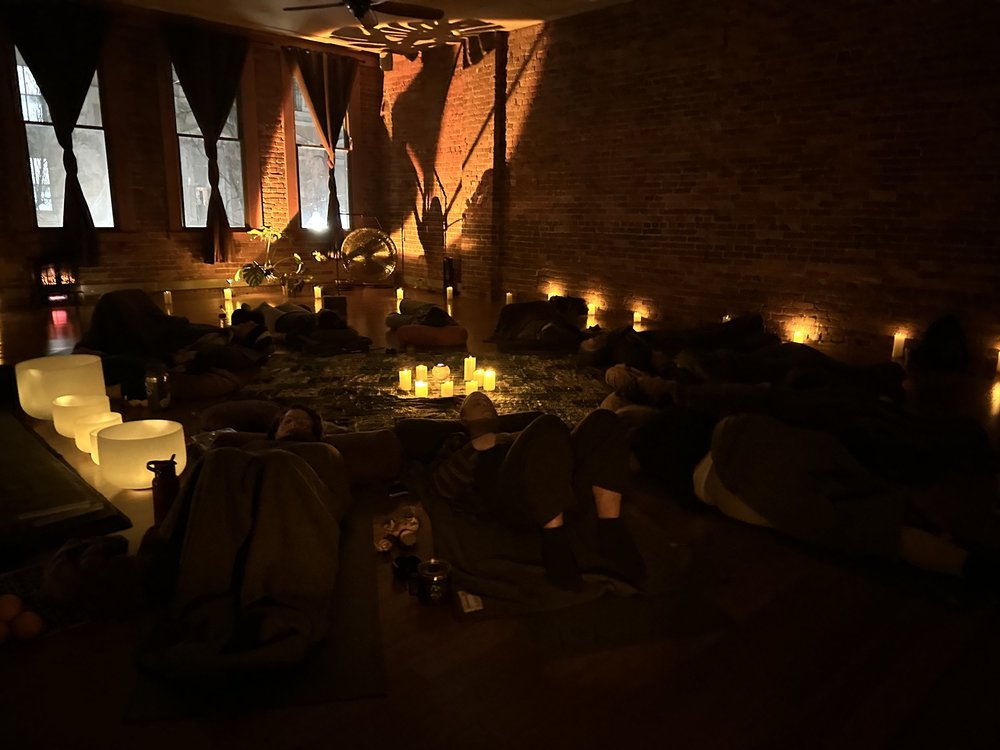
What happens in the room
Arrive and build your nest
Come ten minutes early. Shoes off, phone silent, then pick a mat. Mats, bolsters and blankets are ready for you, and you're welcome to bring your own.
Settle
Graham opens with a few words and some slow breathing to help everyone land. Some sessions add gentle movement or a short meditation.
The sound
Then the bowls begin. The sound rises and falls in waves, sometimes full enough to feel in your chest, sometimes almost nothing at all, with silence in between.
Come back slowly
The sound fades and you get time to lie still. Sit up when you're ready. There's no rush to leave.
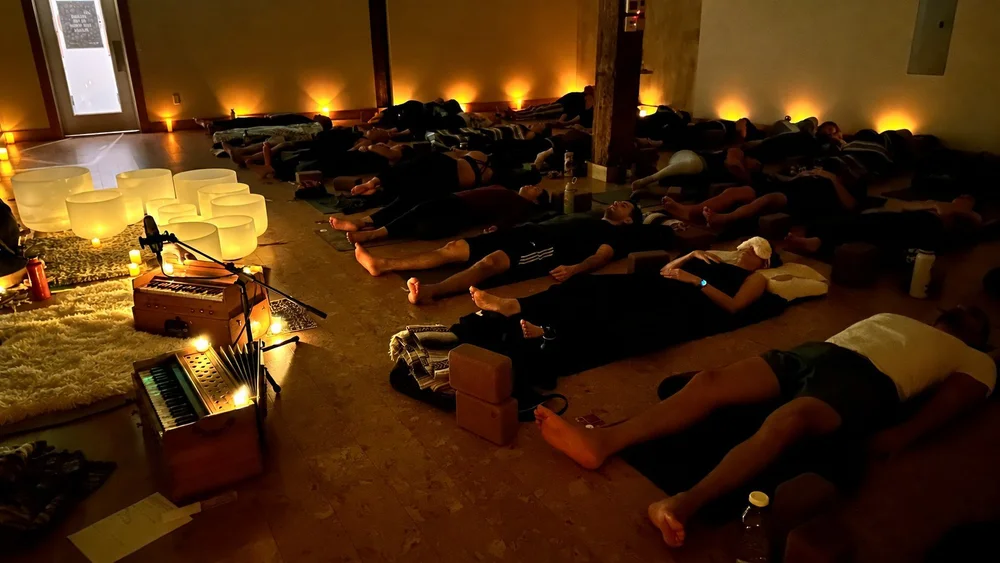
What you'll hear
Every session is played live, so no two sound the same. These are the instruments you're most likely to meet.
Crystal singing bowls
Frosted quartz bowls that hum when played with a mallet. They carry the long, steady tones that most of a session rests on.
Gong
Deep, rolling waves of sound that swell and fade. It gets loud at times, and never sudden.
Harmonium and voice
A hand-pumped reed organ with a warm drone, and Graham's voice through chant, humming and song.
Handpan
A steel drum with soft, melodic notes, played by hand.
Chimes and tingsha
Small bells and chimes that mark a turn in the session or bring you back.
Drums and rattles
Low pulses and seed rattles, used to ground a session or shift its energy.
What you might feel
There's no right way for a sound bath to go. People commonly describe:
- Deep physical relaxation, like the floor is holding more of you
- Drifting into sleep, or somewhere just short of it
- Tingling, warmth, or feeling the tones in your body
- Colors, images or memories passing through
- Emotion rising up, sometimes tears, sometimes laughter
- Restlessness at first, then settling
Whatever comes is fine. If something is uncomfortable, you can change position, open your eyes or step out at any point.
What to bring
- Layers. Your body cools as it relaxes. Wear something soft and bring a sweater.
- Socks. Floors get cold, and feet get noticed.
- A water bottle for before and after.
- Your own blanket or eye pillow if you prefer your own. Studio sessions have the basics.
- An empty stomach, mostly. Eat light beforehand so you can lie flat comfortably.
- Ten spare minutes. Arriving early makes the whole session softer.
Sound baths at Aloka
Aloka is Graham Slick's sound ceremony practice in Portland. Every session is led by Graham, capped at twelve mats, and called a Lab. Tickets are typically $40, with $25 supported spots for anyone who needs them.
Sundays · rotating studios
Sound Lab
The open door. Ninety minutes of sound, breath and stillness in partner studios across Portland, and the best first session for most people.
All welcomeLearn more →Thursdays · Bodha Yoga
Ground Lab
A two-hour cannabis ceremony downtown at Bodha Yoga, formerly Yoga on Yamhill, moving through body, breath and bowls.
21+Learn more →Seasonal · Mt. Tabor
Park Lab
The same practice outdoors, under the trees on Mt. Tabor. Bring your own mat and blankets.
OutdoorsLearn more →Want it for a group? Graham also leads private sessions for up to six in the Attic, his studio in SE Portland, private groups at your home or venue, and sessions for organizations. Compare the formats →
Questions people ask
Do I need any experience?
No. There's nothing to learn beforehand. If you can lie down, you can do this.
What if I fall asleep?
That's common and completely fine. Your body is still resting and still hearing. If you snore, nobody minds.
Is it loud?
It moves between very quiet and full. The gong and the bowls can get strong, but they build gradually. If you're sensitive to sound, tell Graham and choose a mat farther from the instruments.
Is a sound bath religious?
No belief is asked of you. Graham draws on meditation and devotional sound traditions, and you're welcome to experience it simply as deep rest.
How is a sound bath different from meditation?
In most meditation you do the focusing. In a sound bath the sound does it for you. That makes it an easier way in for people who find sitting meditation hard.
What's the difference between Sound Lab and Ground Lab?
Sound Lab is Aloka's general session, open to everyone. Ground Lab is an intentional cannabis ceremony for guests 21 and over, so cannabis will be present in the room. Both are led by Graham.
Can I bring a friend or partner?
Yes. Each person needs a ticket, and with only twelve mats, booking together early is the way to lie side by side.
How much does it cost?
Public sessions are typically $40, with $25 supported tickets available. Private sessions and events for organizations are quoted individually through the contact page.
Come lie down
The easiest way to understand a sound bath is to be in one. Find a session that fits your week.